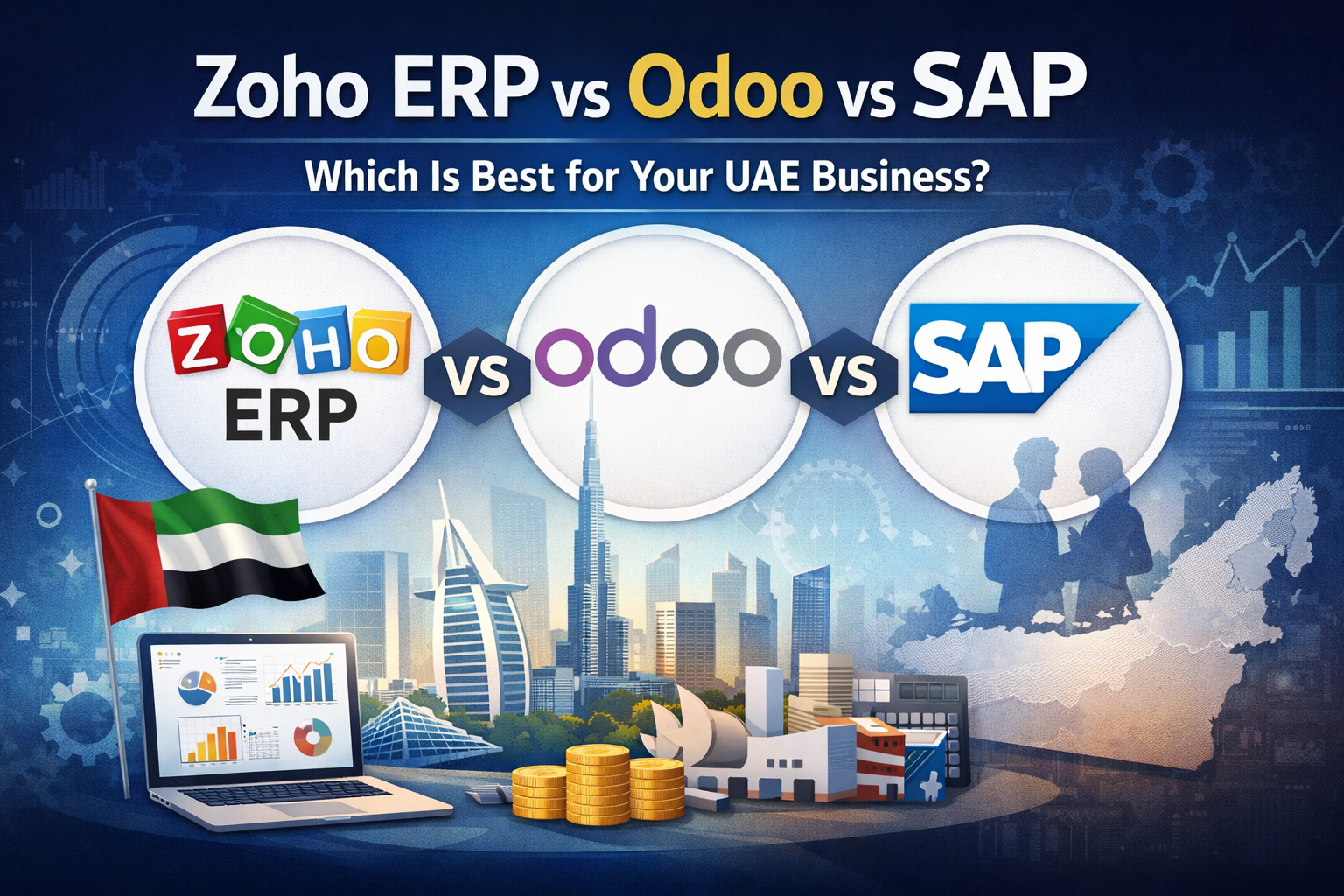
Choosing the right ERP system is one of the most important strategic decisions a UAE business can make. Whether you operate in Dubai’s competitive trading sector, Abu Dhabi’s industrial landscape, or a fast-growing eCommerce brand serving the GCC, your ERP system will directly impact efficiency, compliance, and scalability.
Three names consistently dominate ERP discussions in the UAE market:
Zoho ERP
Odoo
SAP (S/4HANA & Business One)
But which one is truly the best fit for your business?
This in-depth comparison is designed specifically for UAE decision-makers — CEOs, CFOs, IT managers, and operations heads — who want clarity before investing in an ERP system.
ERP in the UAE Context (Quick Recap)
If you’re already familiar with ERP fundamentals, you can skip ahead.
If not, we’ve covered ERP basics and UAE relevance in detail in our dedicated guide:
👉 What Is an ERP — and Why It Matters for UAE Businesses?
In this article, we’ll focus strictly on comparison — helping you evaluate:
Cost and ROI
Implementation complexity
VAT compliance & UAE localization
Customization flexibility
Scalability
Industry suitability
Let’s dive in.
1️⃣ Zoho ERP – Affordable, Cloud-First, and SME-Friendly

Overview
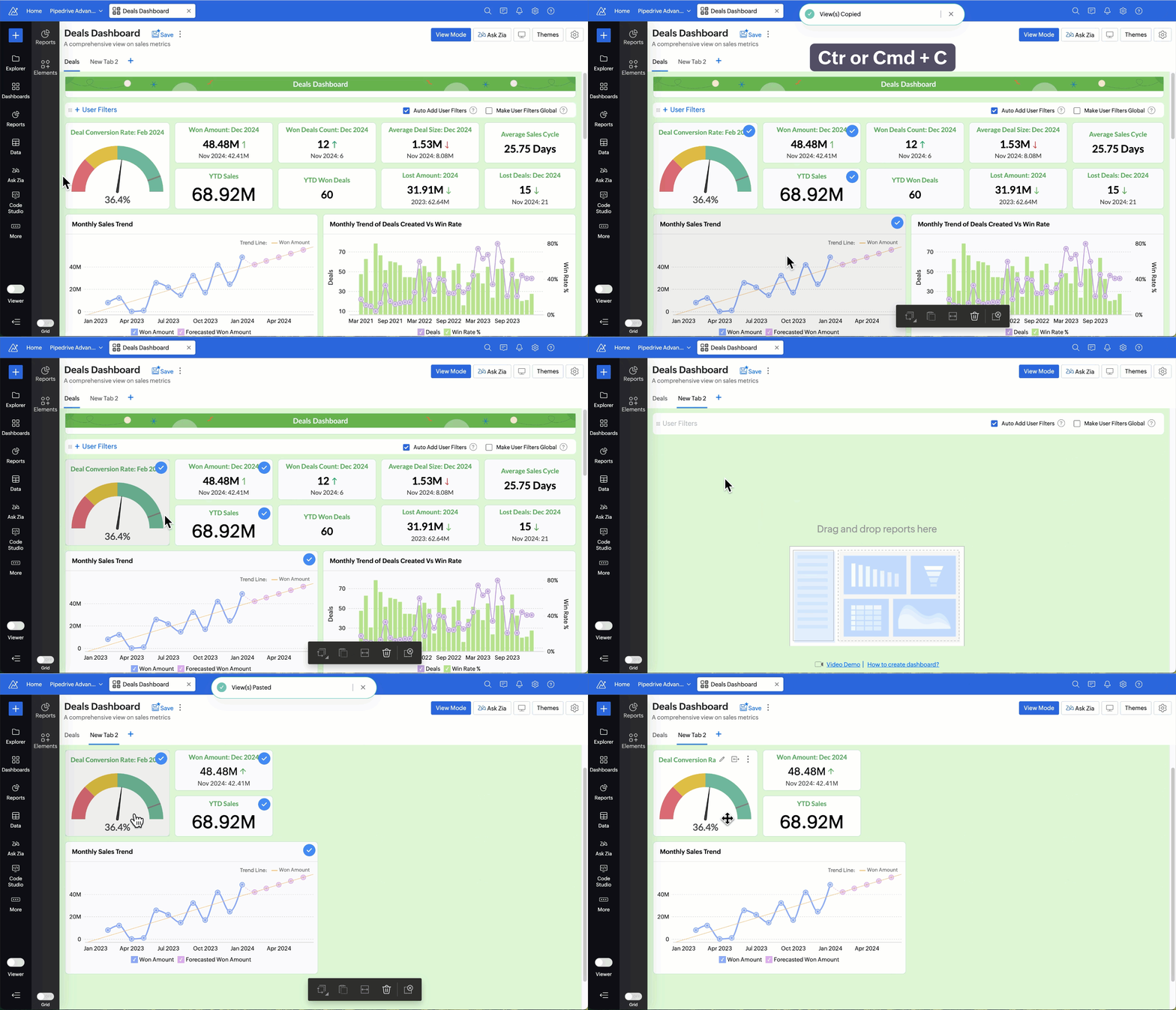
Zoho ERP is not a single monolithic system like SAP. Instead, it is a fully integrated ecosystem of business applications — including Zoho Books, Zoho CRM, Zoho Inventory, Zoho Projects, and more — working together as a unified ERP solution.
It is especially popular among UAE startups and SMEs looking for affordability and fast deployment.
Key Strengths of Zoho ERP
✅ 1. Cost-Effective for UAE SMEs
Zoho offers predictable subscription pricing, making it attractive for:
Small trading companies
Retail businesses
Service-based firms
E-commerce startups
Lower upfront investment means faster ROI.
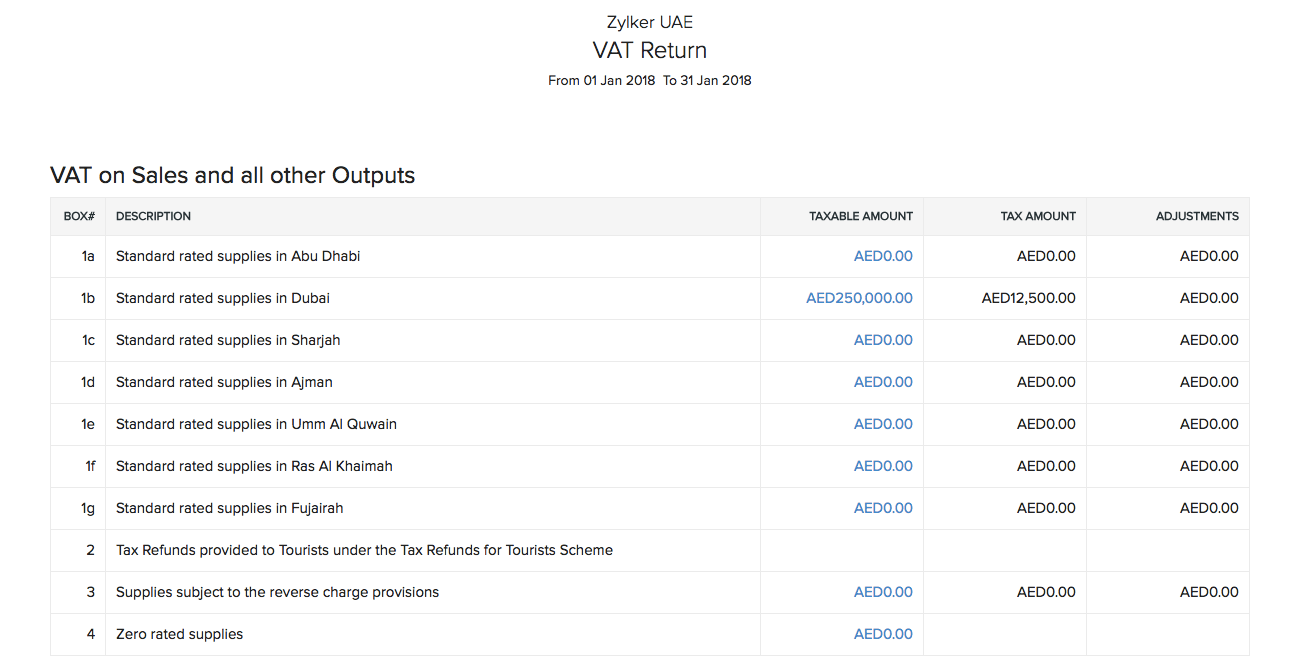
✅ 2. Built-In UAE VAT Support
Zoho Books supports:
UAE VAT reporting
FTA-compliant tax calculations
Automated VAT return summaries
This reduces compliance stress for finance teams.
✅ 3. Quick Implementation
Unlike SAP, Zoho can often be implemented in weeks rather than months.
✅ 4. Fully Cloud-Based
No heavy infrastructure required. Ideal for:
Remote teams
Growing startups
Multi-branch businesses
Limitations of Zoho ERP
Less suitable for highly complex manufacturing
Limited deep supply chain capabilities compared to SAP
Customization possible, but not as flexible as Odoo
Best for:
Small to mid-sized UAE businesses
Companies prioritising affordability
Service companies and retail businesses
Businesses needing a fast go-live
2️⃣ Odoo – Flexible, Modular, and Customizable
Overview
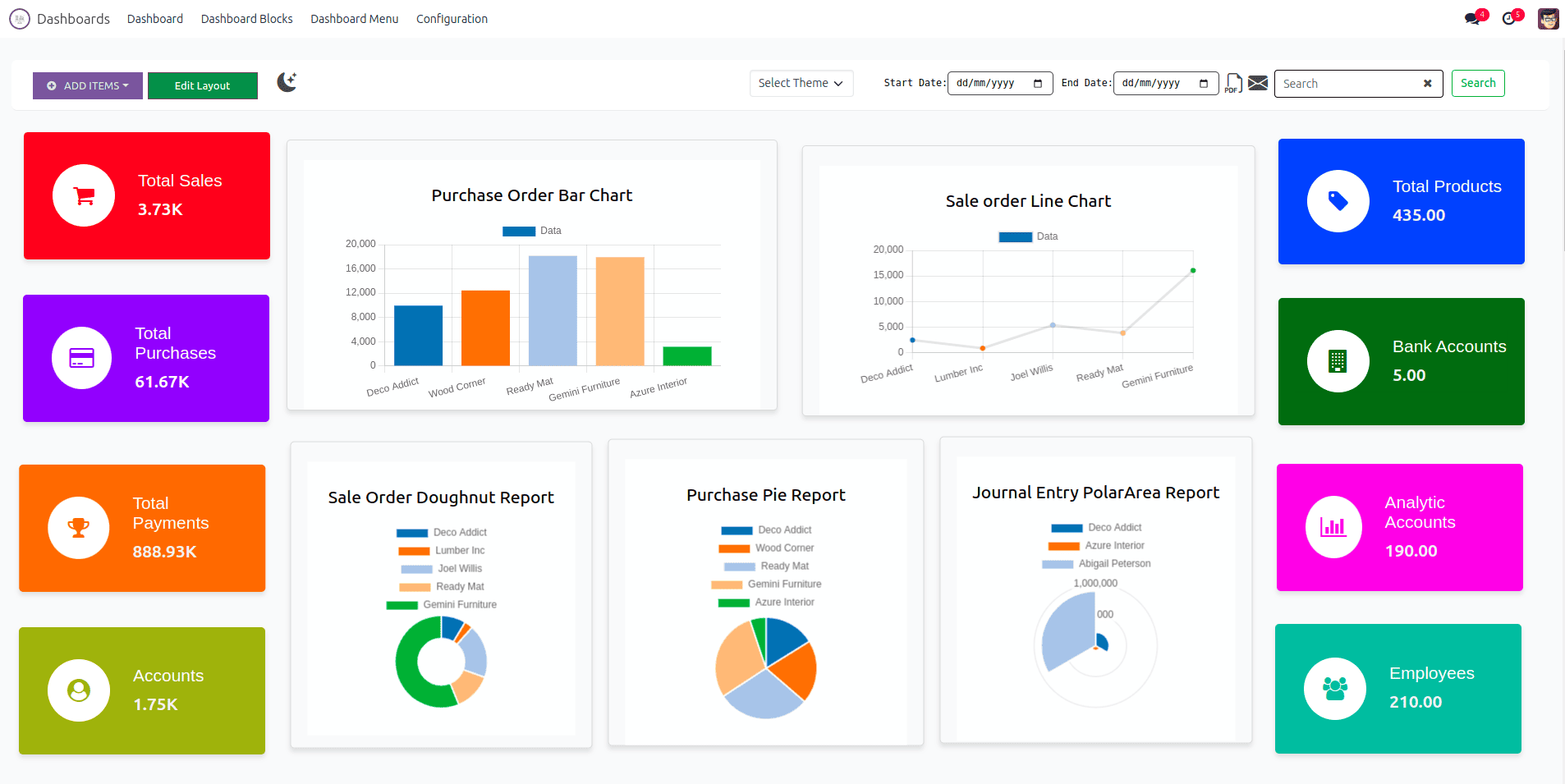
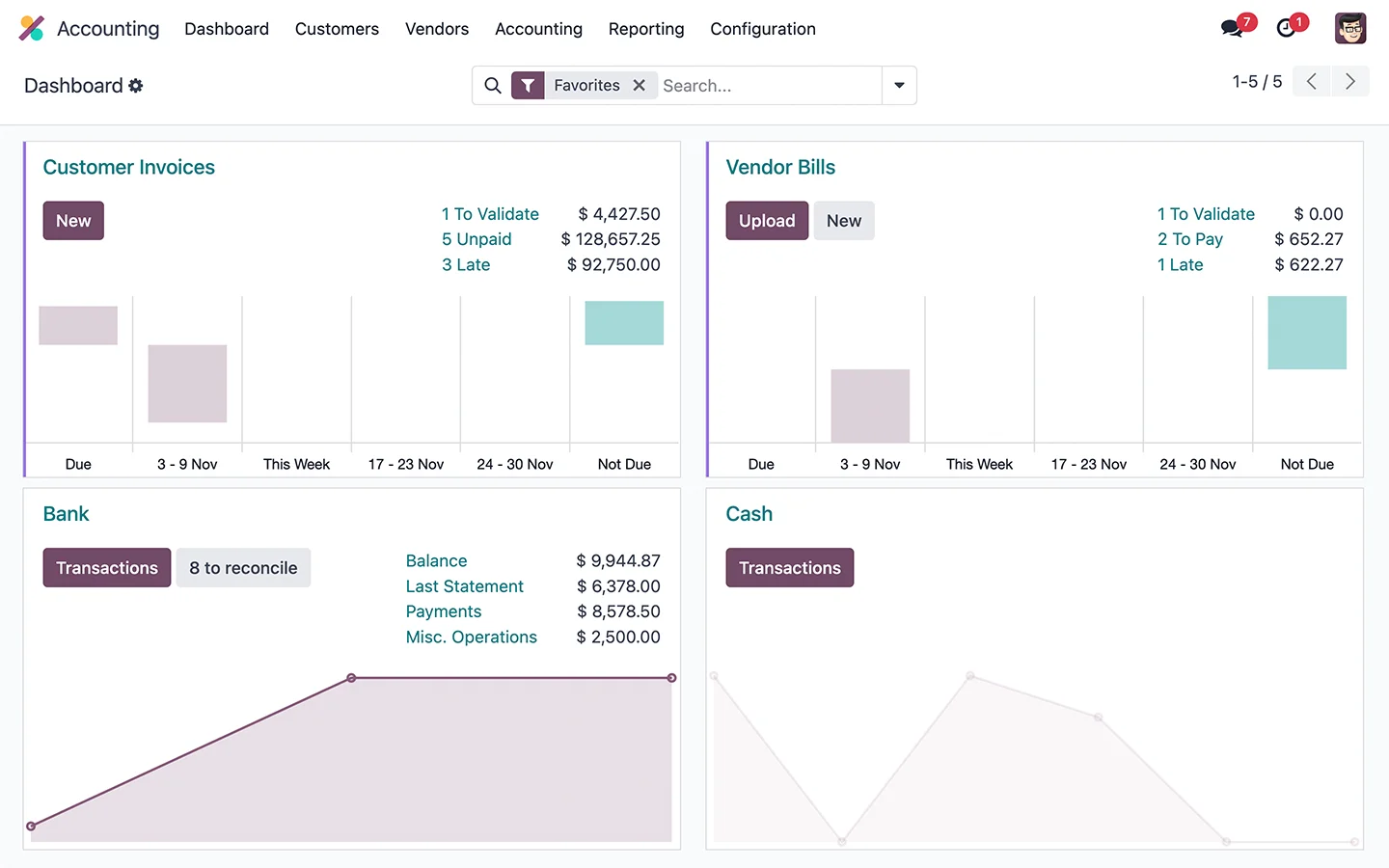
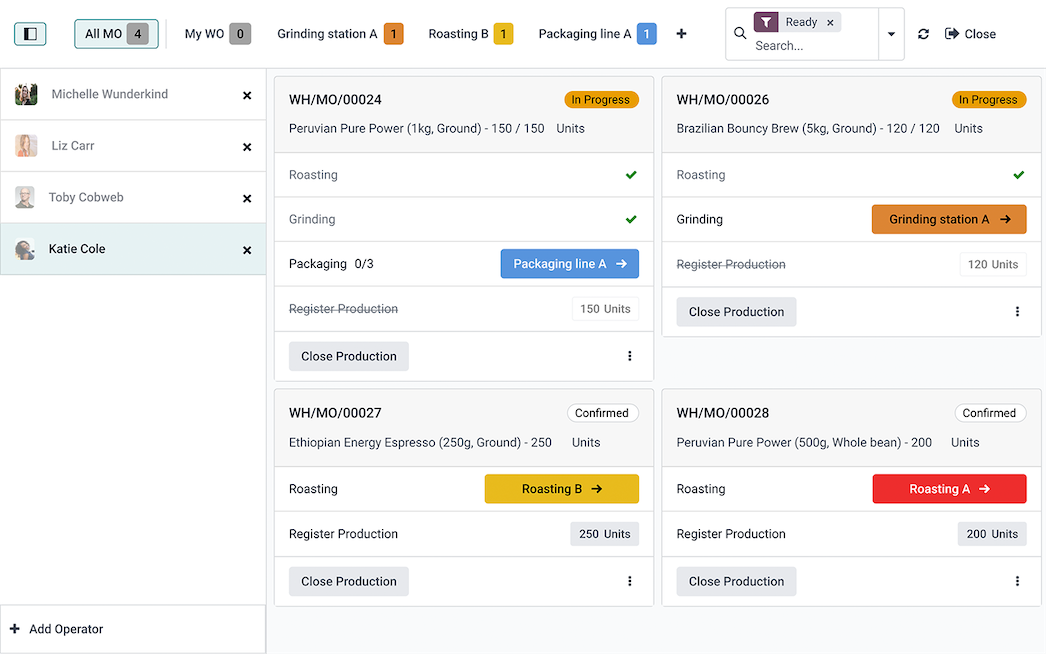
Odoo is one of the fastest-growing ERP platforms globally. What makes it unique is its modular structure. You can start with just accounting and CRM — and later expand into manufacturing, inventory, HR, or eCommerce.
This flexibility makes it very popular among UAE mid-sized companies.
Key Strengths of Odoo
✅ 1. Highly Customizable
Odoo’s open-source foundation allows:
Workflow customization
Industry-specific modifications
Integration with third-party systems
For businesses with unique processes, this is a major advantage.
✅ 2. Modular Pricing
You only pay for the modules you use:
Accounting
Inventory
Manufacturing
HR
CRM
Projects
This allows phased ERP adoption.
✅ 3. Suitable for Trading & Manufacturing in the UAE
Odoo handles:
Multi-warehouse inventory
Purchase and sales automation
Basic to mid-level manufacturing processes
✅ 4. Local Partner Ecosystem in the UAE
There are many Odoo implementation partners in Dubai and Abu Dhabi, making support accessible.
Limitations of Odoo
Customisation increases cost and implementation time
Community version lacks official support
Requires an experienced technical partner for best results
Best for:
Mid-sized UAE companies
Trading & distribution firms
Light manufacturing businesses
Companies needing custom workflows
3️⃣ SAP – Enterprise Powerhouse for Complex Operations
Overview
SAP is globally recognised as a leader in enterprise ERP. In the UAE, SAP is widely adopted by:
Large conglomerates
Construction giants
Oil & gas companies
Large-scale manufacturers
Multinational corporations
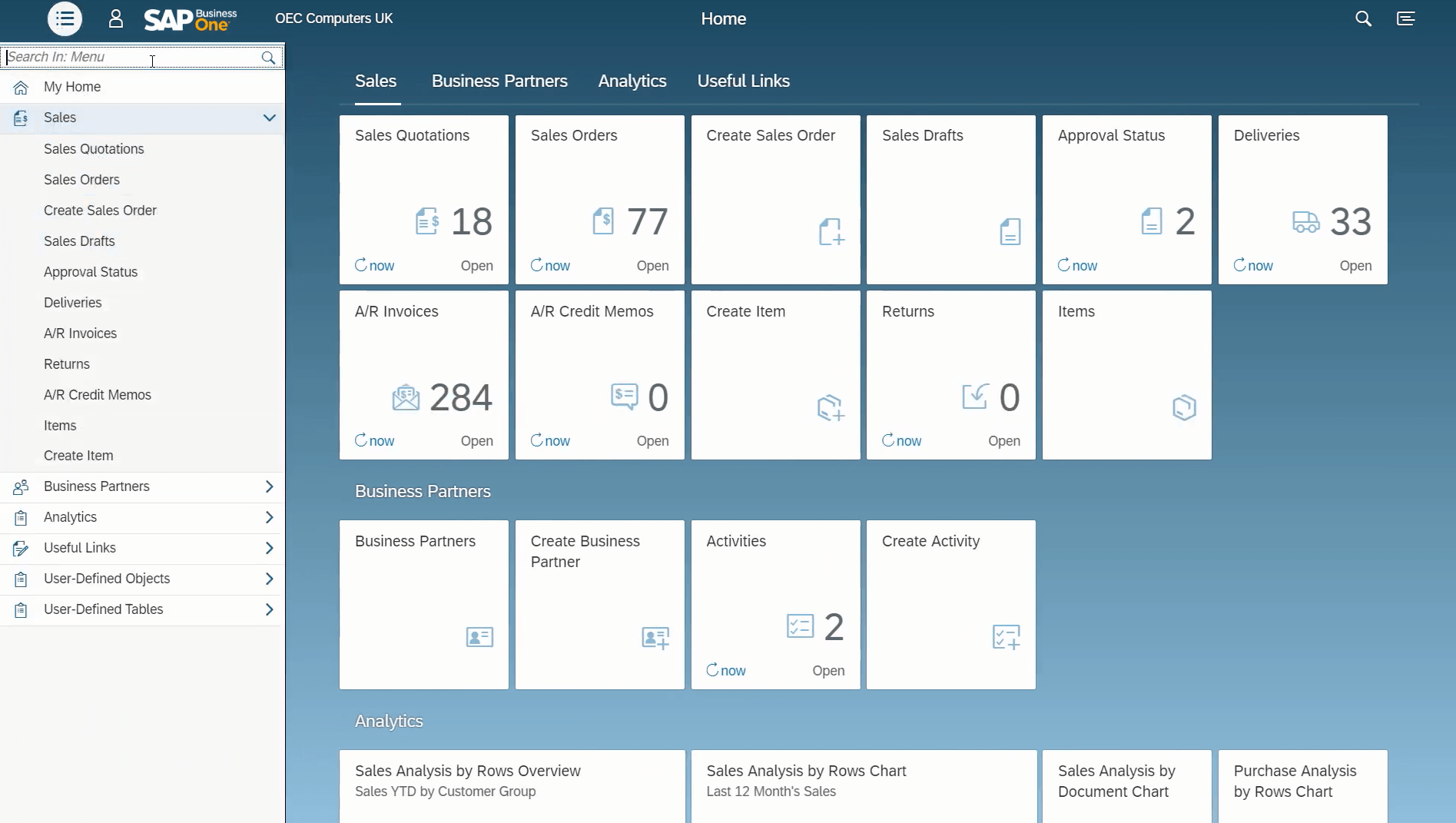
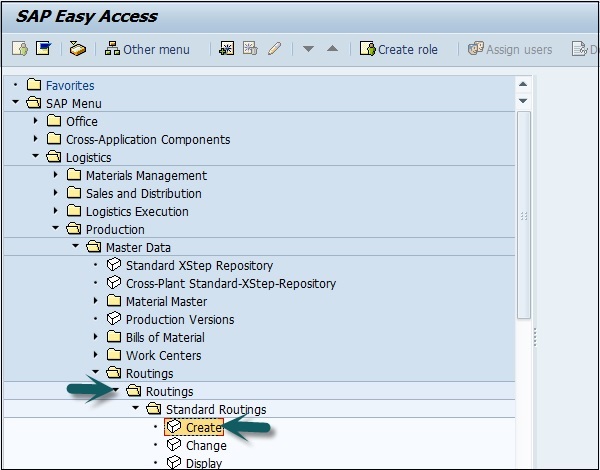
SAP solutions in the UAE typically include:
SAP S/4HANA (for large enterprises)
SAP Business One (for mid-sized companies)
Key Strengths of SAP
✅ 1. Enterprise-Grade Functionality
SAP covers:
Advanced financial management
Deep supply chain planning
Complex procurement
Multi-country compliance
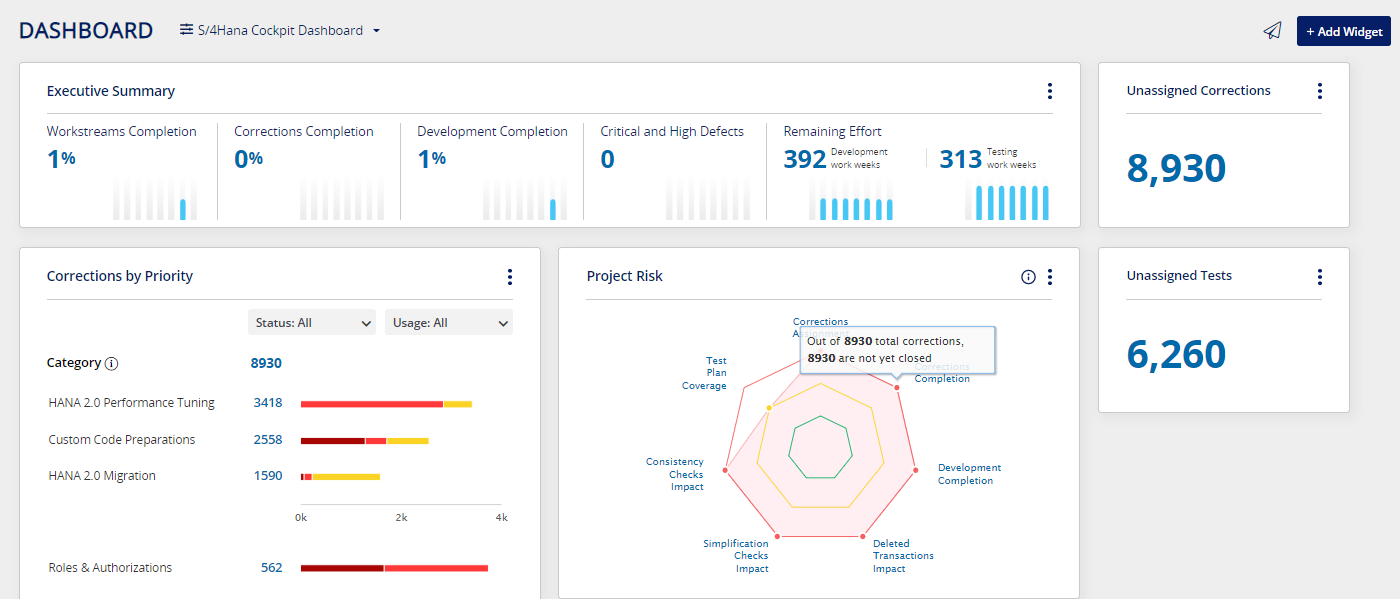
✅ 2. Real-Time Analytics
Powered by HANA database:
Instant reporting
Predictive insights
Executive dashboards
✅ 3. Global & GCC Compliance
Ideal for companies operating across:
UAE
Saudi Arabia
Qatar
International markets
✅ 4. Scalability Without Limits
If your growth strategy includes acquisitions or global expansion, SAP handles complexity better than Zoho or Odoo.
Limitations of SAP
High licensing and implementation cost
Longer implementation cycle (6–18 months)
Requires strong internal IT or consulting support
Best for:
Large UAE enterprises
Construction & infrastructure companies
Multi-entity corporations
Businesses with complex supply chains
Side-by-Side Comparison: Zoho vs Odoo vs SAP
| Criteria | Zoho ERP | Odoo | SAP |
|---|---|---|---|
| Cost | Low | Moderate | High |
| Implementation Time | Fast | Medium | Long |
| Customization | Limited | High | High (Costly) |
| UAE VAT Compliance | Strong | Strong (with setup) | Excellent |
| Manufacturing Capability | Basic | Moderate | Advanced |
| Scalability | Good for SMEs | Strong for mid-size | Enterprise-level |
| Best For | Small businesses | Growing companies | Large enterprises |
Which ERP Is Best for Your UAE Business?
🟢 Choose Zoho If:
You are an SME or startup
The budget is limited
You need fast deployment
You operate in retail, services, or e-commerce
🔵 Choose Odoo If:
You need customization
You’re scaling steadily
You have trading or light manufacturing operations
You want flexibility
🔴 Choose SAP If:
You are a large enterprise
You operate in multiple countries
You have complex compliance needs
You require advanced analytics and supply chain management
Industry-Based Recommendation (UAE Focus)
| Industry | Recommended ERP |
|---|---|
| Retail & eCommerce | Zoho or Odoo |
| Trading & Distribution | Odoo |
| Construction | SAP or Odoo (depending on scale) |
| Manufacturing | Odoo (mid) / SAP (large) |
| Professional Services | Zoho |
| Oil & Gas | SAP |
Key Questions to Ask Before Deciding
What is our 5-year growth plan?
Do we need multi-country compliance?
How complex are our supply chain operations?
Do we have in-house IT expertise?
What is our realistic ERP budget (including implementation)?
Answering these honestly will narrow your choice quickly.
Final Verdict
There is no universal “best” ERP — only the best ERP for your business size, complexity, and growth ambitions.
Zoho wins on affordability and speed
Odoo wins on flexibility
SAP wins on power and scalability
For most UAE SMEs, Zoho or Odoo will deliver a strong ROI.
For large enterprises or multinational operations, SAP remains the gold standard.
Need Expert Guidance?
Selecting an ERP is not just about features — it’s about long-term strategy, operational alignment, and change management.
If you’re evaluating ERP solutions for your UAE business, consider conducting:
A detailed needs assessment
A process gap analysis
A total cost of ownership (TCO) comparison
A pilot implementation phase
The right ERP will not just manage your business — it will transform it.